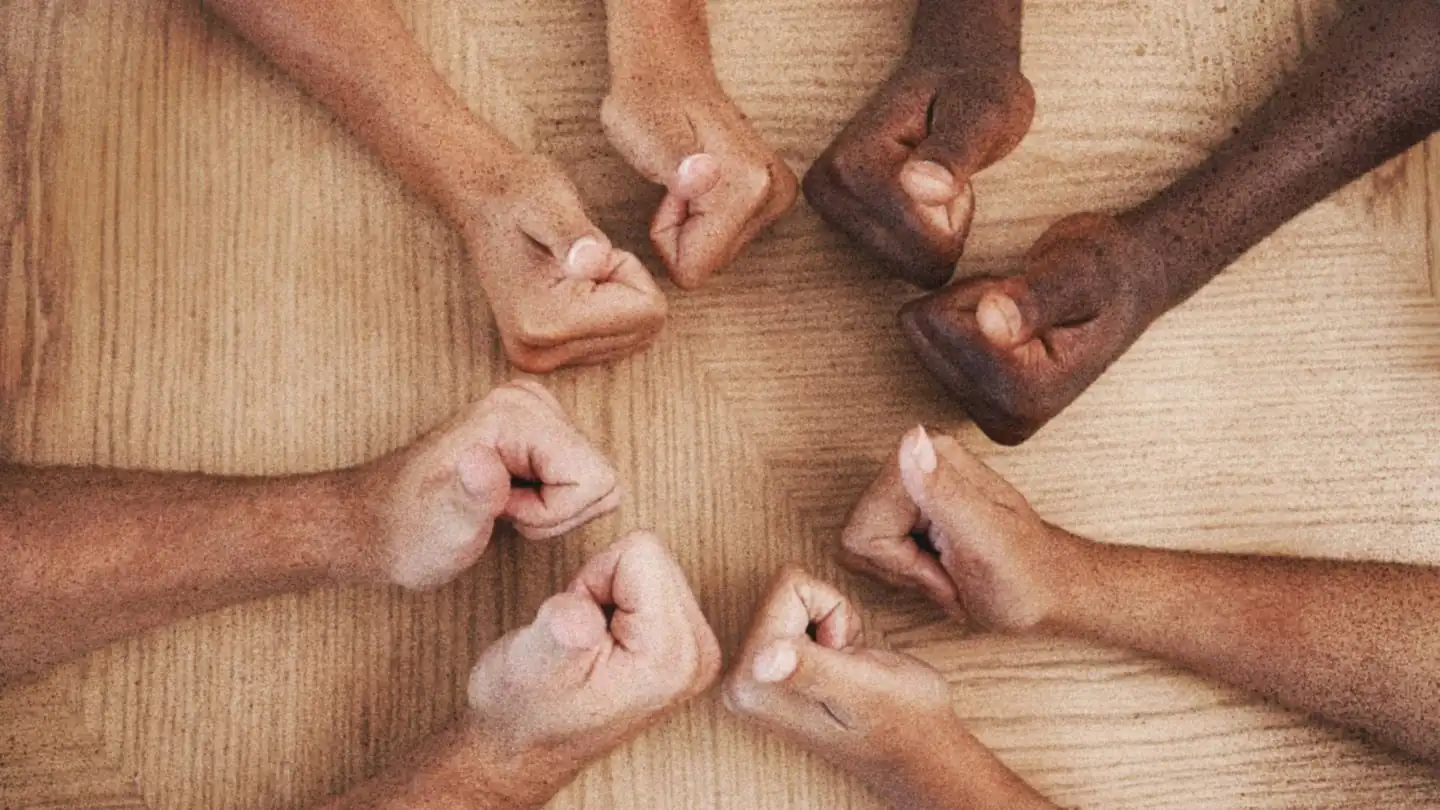
Reparar el daño, proteger a las víctimas y respetar la autoridad de las naciones nativas.
Una comunidad necesita más que una sentencia
Cuando alguien sufre un daño, la comunidad le debe más que una declaración de que se violó una ley. Le debe atención a la seguridad, a lo que se perdió y a las condiciones que permitieron que el daño ocurriera. Una sentencia penal puede ser parte de la respuesta. Pero por sí sola no puede decirnos si la víctima tiene apoyo, si una familia puede recuperarse o si la persona responsable ha cambiado.
Por eso, la crítica al castigo racializado debería llevarnos a una pregunta constructiva: ¿qué construiríamos si tuviéramos la autoridad y los recursos para responder de otra manera? Para mí, la justicia debe incluir un camino hacia la reparación y la reintegración cuando eso pueda lograrse de forma segura. También debe respetar a las personas que sufrieron el daño, incluidas las que no quieren tener contacto con quien se los causó.
Aprender de una tradición viva
El Programa de Pacificación (Peacemaking Program) de la Nación Navajo ofrece un ejemplo concreto. Según su propia descripción, es un proceso guiado por pacificadores, relatos y enseñanzas, orientado a identificar el problema de fondo y a restaurar las relaciones y la armonía. Considera que reconocer la verdad y dejar de negarla forma parte de la posibilidad de sanar.[22] Se trata de una institución diné viva, no de un modelo genérico que personas ajenas puedan reclamar como propio.
Esa especificidad importa. Las naciones indígenas tienen tradiciones jurídicas, historias e instituciones distintas. Sería inexacto decir que todas las sociedades indígenas usaban solo respuestas restaurativas o que el castigo es algo propio de los europeos. Afirmaciones así sustituyen un estereotipo por otro y hacen ver a las culturas como algo fijo, en lugar de capaces de discrepar, adaptarse y cambiar.
Las comunidades mexicanas y chicanas pueden construir relaciones con las naciones nativas sin borrar esas diferencias. Cuando se comparte un conocimiento, debe compartirse con permiso y con respeto por las personas que lo mantienen vivo. Nuestro deseo de renovación cultural no nos da licencia para rebautizar las prácticas de otra nación ni para hablar por encima de sus autoridades.
Una rendición de cuentas que se pueda evaluar
La justicia restaurativa también cuenta con un historial de investigación empírica. Una revisión sistemática de 2015 analizó diez ensayos aleatorizados de encuentros cara a cara en los que participaron víctimas que dieron su consentimiento y personas acusadas o condenadas. Encontró una reducción promedio modesta de la reincidencia. Ese resultado justifica tomar en serio estos enfoques; no demuestra que todos los programas funcionen ni que un encuentro sea adecuado para cualquier caso.[23]
Una revisión más amplia, resumida por la Oficina de Programas de Justicia (Office of Justice Programs), también reportó resultados prometedores en algunos programas para menores, entre ellos la satisfacción de las víctimas, aunque señaló efectos positivos más pequeños en los estudios con diseños más rigurosos.[24] La evaluación debe ser parte del compromiso, no un inconveniente que se ignora cuando los resultados son menos espectaculares de lo que esperan quienes promueven estos programas.
Yo juzgaría un programa comunitario por obligaciones concretas: si la participación es libre, si las víctimas reciben apoyo independiente, si los compromisos para reparar el daño son realistas y si hay personas capacitadas para responder cuando la seguridad está en riesgo. Nadie debería sentirse presionado a perdonar para que un programa parezca exitoso. Nadie debería estar obligado a aceptar una versión de los hechos con la que no está de acuerdo solo para satisfacer una exigencia pública de reconciliación.
Un sistema responsable también debe distinguir entre explicar una conducta y excusarla. Prestar atención al trauma, la discapacidad, la pobreza o la exclusión puede orientar la respuesta sin borrar el daño. El sentido de entender esas circunstancias es elegir obligaciones y apoyos eficaces, y después comprobar si se están cumpliendo.
La soberanía debe incluir la protección
El autogobierno nativo no es solo una aspiración cultural. Las renovaciones de 2013 y 2022 de la Ley de Violencia contra la Mujer (Violence Against Women Act) reconocieron una jurisdicción penal tribal especial sobre ciertos delitos, incluidos algunos cometidos por personas no indígenas. La ley de 2022 amplió los delitos incluidos. Las tribus que participan deben cumplir los requisitos que marca la ley; esa autoridad es importante, pero no ilimitada.[25]
Este ejemplo pone en duda la idea de que respetar la autoridad nativa significa debilitar la protección de las víctimas. La capacidad de una comunidad para pedirle cuentas a una persona puede depender de que su gobierno tenga permitido actuar y cuente con los medios para hacerlo. Apoyar la soberanía debería incluir recursos constantes para tribunales, defensa, servicios a víctimas y respuestas con raíz cultural elegidas por la propia nación.
Para las comunidades mexicanas y chicanas, que no son gobiernos tribales, el control comunitario tiene otro significado legal. Podemos impulsar la supervisión local, el acceso a servicios en nuestro idioma, las alternativas al proceso penal, la defensoría pública y los servicios en los barrios sin reclamar la jurisdicción ni los derechos de tratado de una nación nativa. La solidaridad es más creíble cuando respeta esa distinción.
El futuro que nos toca construir
Mi propuesta es empezar por instituciones que la gente pueda usar: programas diseñados con la participación de las personas sobrevivientes, orientación psicológica accesible, educación, apoyo al salir de prisión y oportunidades reales de reparar el daño. Las dependencias públicas deberían publicar sus resultados y responder cuando una comunidad identifique un trato discriminatorio. Las naciones nativas deberían encabezar las decisiones sobre sus propias tradiciones de justicia y sus prioridades.
El registro histórico nos da razones para desconfiar del castigo que no rinde cuentas. También nos da la responsabilidad de describir con cuidado una respuesta mejor. Necesitamos el valor para enfrentar el daño y la paciencia para apoyar el cambio. Una persona debe rendir cuentas por lo que hizo, mientras que la comunidad sigue siendo responsable de preguntarse si su respuesta hará menos probable otra herida.
Fuentes y lecturas recomendadas
- Poder Judicial de la Nación Navajo. Peacemaking Program Plan of Operations, Hózhóji Naat'aah. Fuente de acceso abierto.
- Lawrence W. Sherman y colaboradores. Are Restorative Justice Conferences Effective in Reducing Repeat Offending? Findings from a Campbell Systematic Review, Journal of Quantitative Criminology 31 (2015), 1-24; resumen indexado por la OJP. Fuente de acceso abierto.
- Office of Justice Programs. Effectiveness of Restorative Justice Programs, OJJDP-Funded Research in Brief (2017). Fuente de acceso abierto.
- Departamento de Justicia de EE. UU., Tribal Justice and Safety. 2013 and 2022 Reauthorizations of the Violence Against Women Act, actualizado el 7 de abril de 2023. Fuente de acceso abierto.
Este artículo fue elaborado por Ángel Rivas como parte de un trabajo de investigación periodística y tiene fines exclusivamente informativos, con la intervención editorial de Rosalba Téllez. El contenido no refleja una opinión personal del autor, y se basa en la recopilación y verificación de información de interés público.
Repairing harm, protecting victims, and respecting the authority of Native nations.
A community needs more than a sentence
When a person is harmed, a community owes more than a declaration that a law was broken. It owes attention to safety, loss, and the conditions that allowed the harm to occur. A criminal sentence may be part of the response. It cannot, by itself, tell us whether a victim has support, whether a family can recover, or whether the person responsible has changed.
The critique of racialized punishment should therefore lead to a constructive question: what would we build with the authority and resources to respond differently? For me, justice must include a path toward repair and reintegration when that can be achieved safely. It must also respect the people harmed, including those who do not want contact with the person who harmed them.
Learn from a living tradition
The Navajo Nation's Peacemaking Program offers a specific example. Its own account describes a process guided by peacemakers, stories, and teachings, oriented toward identifying the underlying problem and restoring relationships and harmony. It treats acknowledgment of the truth and an end to denial as part of the possibility of healing.[22] This is a living Diné institution, not a generic model that outsiders can claim as their own.
That specificity matters. Indigenous nations have distinct legal traditions, histories, and institutions. It would be inaccurate to say that all Indigenous societies used only restorative responses or that punishment belongs inherently to Europeans. Such claims replace one stereotype with another and make cultures appear fixed rather than capable of disagreement, adaptation, and change.
Mexican and Chicano communities can build relationships with Native nations without erasing those differences. Where knowledge is shared, it should be shared with permission and with respect for the people who sustain it. Our desire for cultural renewal is not a license to rename another nation's practices or speak over its authorities.
Accountability that can be evaluated
Restorative justice also has an empirical research record. A 2015 systematic review examined ten randomized trials of face-to-face conferences involving consenting victims and accused or convicted participants. It found a modest average reduction in repeat offending. The result supports taking these approaches seriously; it does not establish that every program works or that a conference is appropriate for every case.[23]
A broader review summarized by the Office of Justice Programs likewise reported promising results for some juvenile programs, including victim satisfaction, while noting smaller positive effects in studies with stronger designs.[24] Evaluation should be part of the commitment, not an inconvenience to be ignored when the findings are less dramatic than advocates hope.
I would judge a community program by concrete obligations: whether participation is freely chosen, whether victims receive independent support, whether commitments to repair harm are realistic, and whether trained people can respond when safety is threatened. Nobody should be pressured to forgive to make a program appear successful. Nobody should be required to accept an account of events they dispute merely to satisfy a public demand for reconciliation.
A responsible system must also distinguish between explaining behavior and excusing it. Attention to trauma, disability, poverty, or exclusion can guide the response without erasing the harm. The point of understanding those circumstances is to choose effective obligations and supports, then determine whether they are being met.
Sovereignty must include protection
Native self-government is not only a cultural aspiration. The 2013 and 2022 reauthorizations of the Violence Against Women Act recognized special tribal criminal jurisdiction over certain offenses, including specified crimes committed by non-Indians. The 2022 law expanded the covered offenses. Participating tribes must meet statutory requirements; the authority is significant but not unlimited.[25]
This example challenges the assumption that respecting Native authority means weakening protection for victims. A community's ability to hold a person accountable can depend on whether its government is permitted and equipped to act. Supporting sovereignty should include sustained resources for courts, defense, victim services, and culturally grounded responses selected by the nation itself.
For Mexican and Chicano communities that are not tribal governments, community control has a different legal meaning. We can advocate local oversight, language access, diversion, public defense, and neighborhood services without claiming the jurisdiction or treaty rights of a Native nation. Solidarity is more credible when it respects that distinction.
The future we are responsible for building
My proposal is to begin with institutions people can use: programs that survivors help design, accessible counseling, education, support after release, and meaningful opportunities to repair damage. Public agencies should publish their outcomes and respond when a community identifies discriminatory treatment. Native nations should lead decisions about their own justice traditions and priorities.
The historical record gives us reasons to distrust unaccountable punishment. It also gives us the responsibility to describe a better response with care. We need the courage to confront harm and the patience to support change. A person should be accountable for what they have done, while a community remains responsible for asking whether its response will make another injury less likely.
Sources and further reading
- Navajo Nation Judicial Branch. Peacemaking Program Plan of Operations, Hózhóji Naat'aah. Open source.
- Lawrence W. Sherman and colleagues. Are Restorative Justice Conferences Effective in Reducing Repeat Offending? Findings from a Campbell Systematic Review, Journal of Quantitative Criminology 31 (2015), 1-24; abstract indexed by OJP. Open source.
- Office of Justice Programs. Effectiveness of Restorative Justice Programs, OJJDP-Funded Research in Brief (2017). Open source.
- U.S. Department of Justice, Tribal Justice and Safety. 2013 and 2022 Reauthorizations of the Violence Against Women Act, updated April 7, 2023. Open source.
This article was written by Ángel Rivas as part of a journalistic investigation and is intended for informational purposes only, with editorial input from Rosalba Téllez. The content does not reflect the author's personal opinion and is based on the collection and verification of information of public interest.