
Grito de Aztlán, logotipo

Journal of Latinx Memory, Dignity, and Cultural Justice

Issue No. 1

Grito de Aztlán: Memory, Land, and Latin Cultural Revolution.

History and current events should be understood to bring us together, not to divide us.

By Ángel Rivas Téllez

Aztlán is not just a place. It is memory, wound, responsibility, and the courage to belong without erasing anyone else.

Before They Called Us Immigrants

Before a border became a line of suspicion, before a child was asked for papers, before our families learned to apologize for their language, there were already peoples, rivers, deserts, songs, cornfields, migrations, ceremonies, villages, and memory. Long before the United States learned to call us foreigners, our ancestors already belonged to this hemisphere.

That is where Grito de Aztlán begins: not with an invitation to hatred, but with a refusal to forget. A people that forgets its history can be convinced that its suffering is personal failure. A people that remembers can begin to understand that many of its wounds were produced by conquest, displacement, forced assimilation, poverty, racial surveillance, and silence.

This series is born of a simple conviction: history and current events should be understood to help bring us together, not to divide us further. Memory must not become a weapon against ourselves. It must become a bridge capable of holding truth, dignity, and responsibility.

What Grito de Aztlán Seeks to Reclaim

Grito de Aztlán is an online magazine dedicated to contemporary struggles, cultural memory, and the political future of Latino and Native American peoples from a pan-nationalist Indigenous perspective. Its purpose is to give language to something many families already feel, but are rarely allowed to say: we are not a people without roots.

Many of us Latinos are peoples of Indigenous descent from the Americas. Many of us also carry African, European, Asian, Caribbean, and blended heritages. Latino identity is not a single color, a single bloodline, a single language, or a single history. It is a living, complex inheritance. Yet within that diversity, many of our communities share histories of colonization, loss of land, racial surveillance, labor exploitation, cultural erasure, migration, survival, and resistance.

Naming these histories does not mean reducing all Latinos to a single experience. It means opening a wider door. It allows Mexican Americans, Chicanos, Indigenous migrants, Afro-Latinos, Central Americans, South Americans, Caribbean Latinos, undocumented families, queer youth, students with disabilities, and incarcerated young people to see that their pain is not separate from history.

Solidarity Without Erasing Native American Nations

A serious Latino cultural renaissance must begin with respect. Native American nations are not symbols for others to borrow. They are distinct peoples, with their own governments, territories, histories, languages, laws, ceremonies, and rights. Their sovereignty cannot be dissolved into a broad Latino identity.

That is why Grito de Aztlán does not call for us to appropriate Native American identity. It calls for building solidarity with Native American nations and with peoples of Indigenous descent against the systems that have dispossessed, disciplined, displaced, and divided them both. Solidarity is not the same as absolute sameness. It does not ask us to pretend our histories are identical. It asks us to recognize where our histories touch, where they differ, and where justice demands that we walk together.

Latino pride without respect for Native American sovereignty becomes another form of erasure. Native American sovereignty without a broader solidarity can leave millions of Indigenous migrants, Chicanos, and mestizo families isolated from the deep history that shaped them as well. A mature movement must hold both truths at once.

Why the Immigrant Framework Is Too Small

In the public language of the United States, Latinos are almost always described only as immigrants. That framework is powerful because it makes us seem temporary. It turns families into guests, workers, numbers, or problems. It makes the country sound like the owner of the house, and our communities like people who should be grateful for permission to enter.

But that story is too small. Much of the southwestern United States was Mexico. Indigenous peoples moved, traded, built, prayed, and survived across the continent long before the modern border existed. Families did not suddenly become foreigners because a war, a treaty, a surveyor, or a government drew a new line over older lands.

The immigrant framework also hides the cost of assimilation. It tells us that acceptance will come if we speak English well enough, work hard enough, lower our voices enough, and move far enough away from our own people. But conditional acceptance is fragile. It disappears when our children are punished more harshly at school, when our neighborhoods are over-policed, when our families are threatened by immigration enforcement, or when our young people are pushed into courts and prisons instead of being protected and healed.

Aztlán as Memory, Wound, and Responsibility

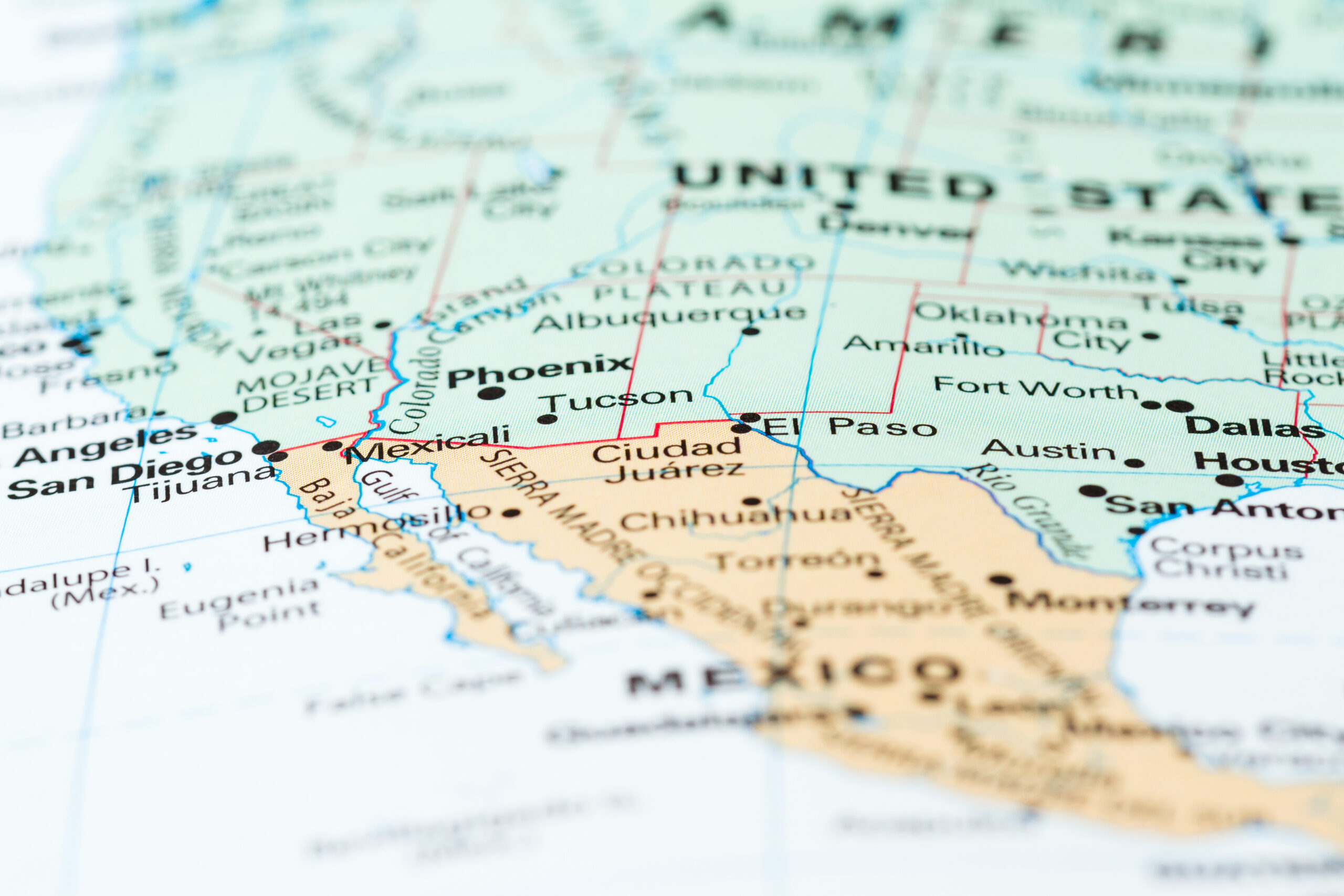
Aztlán is not only a place on a map. In Chicano thought, Aztlán has represented a homeland, a wound, and a call to dignity. Its exact historical location is debated, but its symbolic meaning became powerful during the Chicano Movement, especially around 1969, when it gave many Mexican American and Chicano communities a language of belonging, resistance, and cultural renewal.

Aztlán reminds us that borders are not sacred. People are sacred. Memory is sacred. Land is sacred. A border can rename a person, but it cannot erase a people. A school can discipline a child, but it cannot cancel the history that child carries. A court can impose a sentence, but it cannot measure the full weight of poverty, trauma, disability, racism, language, family separation, or exile.

To speak of Aztlán responsibly does not mean romanticizing the past or erasing anyone else. It means remembering that the present was built by decisions: conquests, treaties, expulsions, segregated schools, labor systems, prisons, and borders. If the present was built, then it can also be changed.

Aztlán is not just a place. It is memory, wound, responsibility, and the courage to belong without erasing anyone else.

What a Cultural Revolution Really Means

A Latino cultural revolution does not mean hatred. It does not mean racial superiority. It does not mean violence. It means memory with discipline. It means teaching our children that they do not come from nothing. It means refusing to treat Spanish, Indigenous languages, Spanglish, accents, family histories, and ancestral memory as signs of inferiority.

It means remembering the collective ethic that has helped our people survive: the child belongs to the community, the elders carry wisdom, pain is shared, food is stretched to go around, work has dignity, and survival should not be a private burden. That ethic stands against a culture that often teaches that poverty is personal failure, that success is private property, and that each person must survive alone.

A cultural revolution also means building schools, media, organizations, churches, families, and movements that do not abandon our Native American relatives, our immigrant families, our incarcerated youth, our undocumented workers, our queer children, our students with disabilities, or our elders. It asks us to stop measuring our worth by how close we can get to power, and to start measuring our strength by how faithfully we protect one another.

A Call to Walk Together

The purpose of remembering history is not to divide people into permanent enemies. The purpose is to stop pretending that present-day suffering came out of nowhere. When people understand history, they can stop blaming one another for wounds produced by larger systems. They can begin to ask better questions: Who benefits when we are ashamed of our roots? Who benefits when Latinos and Native American peoples are kept apart? Who benefits when our children are punished instead of understood?

Grito de Aztlán exists because our people need a voice that is not afraid to name the system, but is also not afraid to imagine something beyond it. We need a voice strong enough to tell the truth and human enough to bring people together rather than scatter them.

Our revolution begins with memory. Memory becomes identity. Identity becomes solidarity. And solidarity becomes power.

Next Article

In the next article, we will move from memory to institutions. We will examine how schools, courts, sentencing systems, and prisons can turn Latino and Native American youth into targets for discipline and punishment, and why understanding that pipeline is necessary if we want a justice that heals rather than destroys.

Selected Sources

[1] PBS SoCal, “Plan De Aztlán: Early Chicano Activism,” sobre Aztlán como concepto de patria espiritual e idea política durante el Movimiento Chicano. https://www.pbssocal.org/shows/departures/clip/plan-de-aztlan- early-chicano-activism

[2] International Center for the Arts of the Americas, Museum of Fine Arts Houston, “El plan espiritual de Aztlán.” https://icaa.mfah.org/s/en/item/803398

[3] Texas State Historical Association, “Aztlán,” sobre la historia y el significado político de Aztlán en la organización chicana. https://www.tshaonline.org/handbook/entries/aztlan

Ángel Rivas Téllez

Author and founder of Grito de Aztlán.  

Issue No. 1

Grito de Aztlán: Memory, Land, and Latin Cultural Revolution.

History and current events should be understood to bring us together, not to divide us.

By Ángel Rivas Téllez

Aztlán is not just a place. It is memory, wound, responsibility, and the courage to belong without erasing anyone else.

Before They Called Us Immigrants

Before a border became a line of suspicion, before a child was asked for papers, before our families learned to apologize for their language, there were already peoples, rivers, deserts, songs, cornfields, migrations, ceremonies, villages, and memory. Long before the United States learned to call us foreigners, our ancestors already belonged to this hemisphere.

That is where Grito de Aztlán begins: not with an invitation to hatred, but with a refusal to forget. A people that forgets its history can be convinced that its suffering is personal failure. A people that remembers can begin to understand that many of its wounds were produced by conquest, displacement, forced assimilation, poverty, racial surveillance, and silence.

This series is born of a simple conviction: history and current events should be understood to help bring us together, not to divide us further. Memory must not become a weapon against ourselves. It must become a bridge capable of holding truth, dignity, and responsibility.

What Grito de Aztlán Seeks to Reclaim

Grito de Aztlán is an online magazine dedicated to contemporary struggles, cultural memory, and the political future of Latino and Native American peoples from a pan-nationalist Indigenous perspective. Its purpose is to give language to something many families already feel, but are rarely allowed to say: we are not a people without roots.

Many of us Latinos are peoples of Indigenous descent from the Americas. Many of us also carry African, European, Asian, Caribbean, and blended heritages. Latino identity is not a single color, a single bloodline, a single language, or a single history. It is a living, complex inheritance. Yet within that diversity, many of our communities share histories of colonization, loss of land, racial surveillance, labor exploitation, cultural erasure, migration, survival, and resistance.

Naming these histories does not mean reducing all Latinos to a single experience. It means opening a wider door. It allows Mexican Americans, Chicanos, Indigenous migrants, Afro-Latinos, Central Americans, South Americans, Caribbean Latinos, undocumented families, queer youth, students with disabilities, and incarcerated young people to see that their pain is not separate from history.

Solidarity Without Erasing Native American Nations

A serious Latino cultural renaissance must begin with respect. Native American nations are not symbols for others to borrow. They are distinct peoples, with their own governments, territories, histories, languages, laws, ceremonies, and rights. Their sovereignty cannot be dissolved into a broad Latino identity.

That is why Grito de Aztlán does not call for us to appropriate Native American identity. It calls for building solidarity with Native American nations and with peoples of Indigenous descent against the systems that have dispossessed, disciplined, displaced, and divided them both. Solidarity is not the same as absolute sameness. It does not ask us to pretend our histories are identical. It asks us to recognize where our histories touch, where they differ, and where justice demands that we walk together.

Latino pride without respect for Native American sovereignty becomes another form of erasure. Native American sovereignty without a broader solidarity can leave millions of Indigenous migrants, Chicanos, and mestizo families isolated from the deep history that shaped them as well. A mature movement must hold both truths at once.

Why the Immigrant Framework Is Too Small

In the public language of the United States, Latinos are almost always described only as immigrants. That framework is powerful because it makes us seem temporary. It turns families into guests, workers, numbers, or problems. It makes the country sound like the owner of the house, and our communities like people who should be grateful for permission to enter.

But that story is too small. Much of the southwestern United States was Mexico. Indigenous peoples moved, traded, built, prayed, and survived across the continent long before the modern border existed. Families did not suddenly become foreigners because a war, a treaty, a surveyor, or a government drew a new line over older lands.

The immigrant framework also hides the cost of assimilation. It tells us that acceptance will come if we speak English well enough, work hard enough, lower our voices enough, and move far enough away from our own people. But conditional acceptance is fragile. It disappears when our children are punished more harshly at school, when our neighborhoods are over-policed, when our families are threatened by immigration enforcement, or when our young people are pushed into courts and prisons instead of being protected and healed.

Aztlán as Memory, Wound, and Responsibility

Aztlán is not only a place on a map. In Chicano thought, Aztlán has represented a homeland, a wound, and a call to dignity. Its exact historical location is debated, but its symbolic meaning became powerful during the Chicano Movement, especially around 1969, when it gave many Mexican American and Chicano communities a language of belonging, resistance, and cultural renewal.

Aztlán reminds us that borders are not sacred. People are sacred. Memory is sacred. Land is sacred. A border can rename a person, but it cannot erase a people. A school can discipline a child, but it cannot cancel the history that child carries. A court can impose a sentence, but it cannot measure the full weight of poverty, trauma, disability, racism, language, family separation, or exile.

To speak of Aztlán responsibly does not mean romanticizing the past or erasing anyone else. It means remembering that the present was built by decisions: conquests, treaties, expulsions, segregated schools, labor systems, prisons, and borders. If the present was built, then it can also be changed.

Aztlán is not just a place. It is memory, wound, responsibility, and the courage to belong without erasing anyone else.

What a Cultural Revolution Really Means

A Latino cultural revolution does not mean hatred. It does not mean racial superiority. It does not mean violence. It means memory with discipline. It means teaching our children that they do not come from nothing. It means refusing to treat Spanish, Indigenous languages, Spanglish, accents, family histories, and ancestral memory as signs of inferiority.

It means remembering the collective ethic that has helped our people survive: the child belongs to the community, the elders carry wisdom, pain is shared, food is stretched to go around, work has dignity, and survival should not be a private burden. That ethic stands against a culture that often teaches that poverty is personal failure, that success is private property, and that each person must survive alone.

A cultural revolution also means building schools, media, organizations, churches, families, and movements that do not abandon our Native American relatives, our immigrant families, our incarcerated youth, our undocumented workers, our queer children, our students with disabilities, or our elders. It asks us to stop measuring our worth by how close we can get to power, and to start measuring our strength by how faithfully we protect one another.

A Call to Walk Together

The purpose of remembering history is not to divide people into permanent enemies. The purpose is to stop pretending that present-day suffering came out of nowhere. When people understand history, they can stop blaming one another for wounds produced by larger systems. They can begin to ask better questions: Who benefits when we are ashamed of our roots? Who benefits when Latinos and Native American peoples are kept apart? Who benefits when our children are punished instead of understood?

Grito de Aztlán exists because our people need a voice that is not afraid to name the system, but is also not afraid to imagine something beyond it. We need a voice strong enough to tell the truth and human enough to bring people together rather than scatter them.

Our revolution begins with memory. Memory becomes identity. Identity becomes solidarity. And solidarity becomes power.

Next Article

In the next article, we will move from memory to institutions. We will examine how schools, courts, sentencing systems, and prisons can turn Latino and Native American youth into targets for discipline and punishment, and why understanding that pipeline is necessary if we want a justice that heals rather than destroys.

Selected Sources

[1] PBS SoCal, “Plan De Aztlán: Early Chicano Activism,” sobre Aztlán como concepto de patria espiritual e idea política durante el Movimiento Chicano. https://www.pbssocal.org/shows/departures/clip/plan-de-aztlan- early-chicano-activism

[2] International Center for the Arts of the Americas, Museum of Fine Arts Houston, “El plan espiritual de Aztlán.” https://icaa.mfah.org/s/en/item/803398

[3] Texas State Historical Association, “Aztlán,” sobre la historia y el significado político de Aztlán en la organización chicana. https://www.tshaonline.org/handbook/entries/aztlan

Ángel Rivas Téllez

Author and founder of Grito de Aztlán.  

Issue No. 1

Grito de Aztlán: Memory, Land, and Latin Cultural Revolution.

History and current events should be understood to bring us together, not to divide us.

By Ángel Rivas Téllez

Aztlán is not just a place. It is memory, wound, responsibility, and the courage to belong without erasing anyone else.

Before They Called Us Immigrants

Before a border became a line of suspicion, before a child was asked for papers, before our families learned to apologize for their language, there were already peoples, rivers, deserts, songs, cornfields, migrations, ceremonies, villages, and memory. Long before the United States learned to call us foreigners, our ancestors already belonged to this hemisphere.

That is where Grito de Aztlán begins: not with an invitation to hatred, but with a refusal to forget. A people that forgets its history can be convinced that its suffering is personal failure. A people that remembers can begin to understand that many of its wounds were produced by conquest, displacement, forced assimilation, poverty, racial surveillance, and silence.

This series is born of a simple conviction: history and current events should be understood to help bring us together, not to divide us further. Memory must not become a weapon against ourselves. It must become a bridge capable of holding truth, dignity, and responsibility.

What Grito de Aztlán Seeks to Reclaim

Grito de Aztlán is an online magazine dedicated to contemporary struggles, cultural memory, and the political future of Latino and Native American peoples from a pan-nationalist Indigenous perspective. Its purpose is to give language to something many families already feel, but are rarely allowed to say: we are not a people without roots.

Many of us Latinos are peoples of Indigenous descent from the Americas. Many of us also carry African, European, Asian, Caribbean, and blended heritages. Latino identity is not a single color, a single bloodline, a single language, or a single history. It is a living, complex inheritance. Yet within that diversity, many of our communities share histories of colonization, loss of land, racial surveillance, labor exploitation, cultural erasure, migration, survival, and resistance.

Naming these histories does not mean reducing all Latinos to a single experience. It means opening a wider door. It allows Mexican Americans, Chicanos, Indigenous migrants, Afro-Latinos, Central Americans, South Americans, Caribbean Latinos, undocumented families, queer youth, students with disabilities, and incarcerated young people to see that their pain is not separate from history.

Solidarity Without Erasing Native American Nations

A serious Latino cultural renaissance must begin with respect. Native American nations are not symbols for others to borrow. They are distinct peoples, with their own governments, territories, histories, languages, laws, ceremonies, and rights. Their sovereignty cannot be dissolved into a broad Latino identity.

That is why Grito de Aztlán does not call for us to appropriate Native American identity. It calls for building solidarity with Native American nations and with peoples of Indigenous descent against the systems that have dispossessed, disciplined, displaced, and divided them both. Solidarity is not the same as absolute sameness. It does not ask us to pretend our histories are identical. It asks us to recognize where our histories touch, where they differ, and where justice demands that we walk together.

Latino pride without respect for Native American sovereignty becomes another form of erasure. Native American sovereignty without a broader solidarity can leave millions of Indigenous migrants, Chicanos, and mestizo families isolated from the deep history that shaped them as well. A mature movement must hold both truths at once.

Why the Immigrant Framework Is Too Small

In the public language of the United States, Latinos are almost always described only as immigrants. That framework is powerful because it makes us seem temporary. It turns families into guests, workers, numbers, or problems. It makes the country sound like the owner of the house, and our communities like people who should be grateful for permission to enter.

But that story is too small. Much of the southwestern United States was Mexico. Indigenous peoples moved, traded, built, prayed, and survived across the continent long before the modern border existed. Families did not suddenly become foreigners because a war, a treaty, a surveyor, or a government drew a new line over older lands.

The immigrant framework also hides the cost of assimilation. It tells us that acceptance will come if we speak English well enough, work hard enough, lower our voices enough, and move far enough away from our own people. But conditional acceptance is fragile. It disappears when our children are punished more harshly at school, when our neighborhoods are over-policed, when our families are threatened by immigration enforcement, or when our young people are pushed into courts and prisons instead of being protected and healed.

Aztlán as Memory, Wound, and Responsibility

Aztlán is not only a place on a map. In Chicano thought, Aztlán has represented a homeland, a wound, and a call to dignity. Its exact historical location is debated, but its symbolic meaning became powerful during the Chicano Movement, especially around 1969, when it gave many Mexican American and Chicano communities a language of belonging, resistance, and cultural renewal.

Aztlán reminds us that borders are not sacred. People are sacred. Memory is sacred. Land is sacred. A border can rename a person, but it cannot erase a people. A school can discipline a child, but it cannot cancel the history that child carries. A court can impose a sentence, but it cannot measure the full weight of poverty, trauma, disability, racism, language, family separation, or exile.

To speak of Aztlán responsibly does not mean romanticizing the past or erasing anyone else. It means remembering that the present was built by decisions: conquests, treaties, expulsions, segregated schools, labor systems, prisons, and borders. If the present was built, then it can also be changed.

Aztlán is not just a place. It is memory, wound, responsibility, and the courage to belong without erasing anyone else.

What a Cultural Revolution Really Means

A Latino cultural revolution does not mean hatred. It does not mean racial superiority. It does not mean violence. It means memory with discipline. It means teaching our children that they do not come from nothing. It means refusing to treat Spanish, Indigenous languages, Spanglish, accents, family histories, and ancestral memory as signs of inferiority.

It means remembering the collective ethic that has helped our people survive: the child belongs to the community, the elders carry wisdom, pain is shared, food is stretched to go around, work has dignity, and survival should not be a private burden. That ethic stands against a culture that often teaches that poverty is personal failure, that success is private property, and that each person must survive alone.

A cultural revolution also means building schools, media, organizations, churches, families, and movements that do not abandon our Native American relatives, our immigrant families, our incarcerated youth, our undocumented workers, our queer children, our students with disabilities, or our elders. It asks us to stop measuring our worth by how close we can get to power, and to start measuring our strength by how faithfully we protect one another.

A Call to Walk Together

The purpose of remembering history is not to divide people into permanent enemies. The purpose is to stop pretending that present-day suffering came out of nowhere. When people understand history, they can stop blaming one another for wounds produced by larger systems. They can begin to ask better questions: Who benefits when we are ashamed of our roots? Who benefits when Latinos and Native American peoples are kept apart? Who benefits when our children are punished instead of understood?

Grito de Aztlán exists because our people need a voice that is not afraid to name the system, but is also not afraid to imagine something beyond it. We need a voice strong enough to tell the truth and human enough to bring people together rather than scatter them.

Our revolution begins with memory. Memory becomes identity. Identity becomes solidarity. And solidarity becomes power.

Next Article

In the next article, we will move from memory to institutions. We will examine how schools, courts, sentencing systems, and prisons can turn Latino and Native American youth into targets for discipline and punishment, and why understanding that pipeline is necessary if we want a justice that heals rather than destroys.

Selected Sources

[1] PBS SoCal, “Plan De Aztlán: Early Chicano Activism,” sobre Aztlán como concepto de patria espiritual e idea política durante el Movimiento Chicano. https://www.pbssocal.org/shows/departures/clip/plan-de-aztlan- early-chicano-activism

[2] International Center for the Arts of the Americas, Museum of Fine Arts Houston, “El plan espiritual de Aztlán.” https://icaa.mfah.org/s/en/item/803398

[3] Texas State Historical Association, “Aztlán,” sobre la historia y el significado político de Aztlán en la organización chicana. https://www.tshaonline.org/handbook/entries/aztlan

Ángel Rivas Téllez

Author and founder of Grito de Aztlán.