
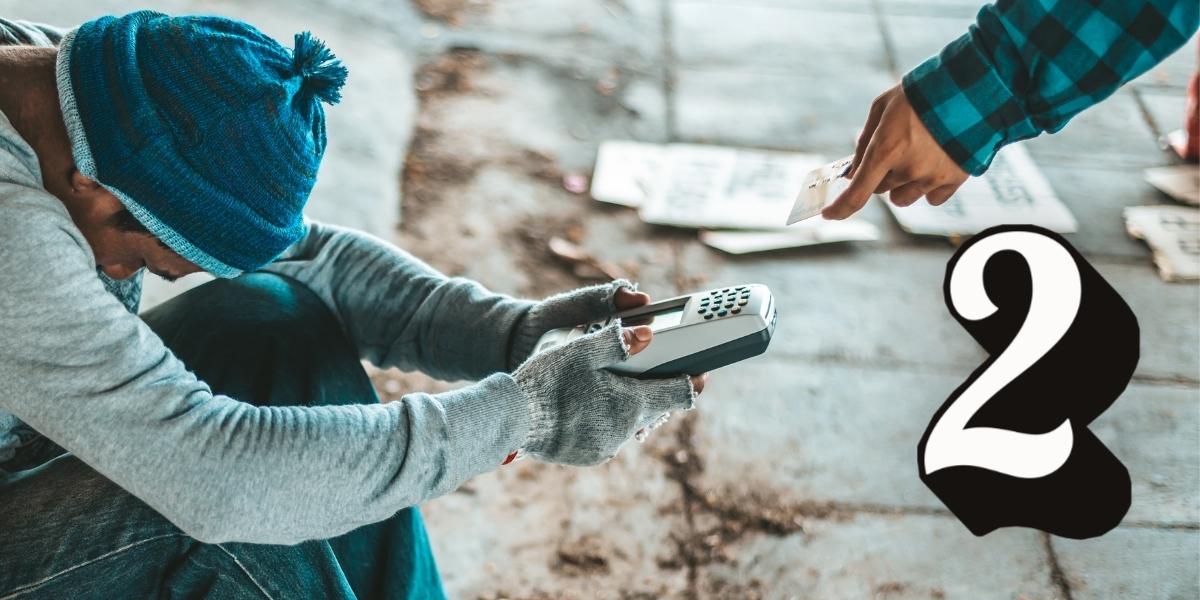
"You can belong if you prove that you are not one of those immigrants."
In Part One, we saw how power used race to keep exploited workers and communities from recognizing one another as allies. This second installment follows the same logic within immigrant communities, where legal status can become a new hierarchy of human worth.
The Bribe Within Immigrant Communities
Today, the racial bribe also operates within immigrant communities, including Latino communities. The division is no longer only between white and non-white. It also appears as citizen against non-citizen, documented against undocumented, established immigrant against newcomer, Latino voter against caravan migrant.
For many immigrants who struggled for years to obtain legal status, citizenship can feel like proof of sacrifice, discipline, and moral worth. That achievement is real. Many people waited, paid lawyers, followed the rules, and lived in fear. But the bribe appears when legal status becomes a moral weapon: I did it the right way, so they deserve punishment. A legal difference is then transformed into a hierarchy of human worth.
The problem is that the immigration system is not equally accessible to everyone. Many people do not have a real line to stand in. Some flee violence, poverty, political instability, climate disasters, or family separation. Others entered as children and grew up in the United States without having chosen their legal situation. Others work for years in agriculture, construction, cleaning, caregiving, restaurants, and services, while remaining legally vulnerable. The Pew Research Center reported that unauthorized immigrants made up about 4.8 percent of the U.S. labor force in 2022.[7]
This creates another version of the bribe: legal belonging is used to separate immigrants from one another. Some Latino citizens or residents may support harsh immigration policies because they believe it protects their own status, their jobs, their neighborhoods, or their political identity. Others feel resentment toward newcomers because they believe their own struggle was ignored. Political campaigns can use that tension by presenting asylum seekers, undocumented people, or caravans as danger, disorder, or unfair competition.
The clash between some Latino voters and caravan migrants reveals a painful truth: closeness does not always produce solidarity. Sometimes it produces distance. The documented immigrant may fear being associated with the undocumented. The citizen may fear being treated as an asylum seeker. The already established Latino family may fear that newcomers will intensify racism against all Latinos.
That is the racial bribe adapted to immigration. It says: you can belong if you prove that you are not one of those immigrants. You are legal, not illegal; hardworking, not dependent; assimilated, not foreign; deserving, not criminal.
But the pact is fragile, because racial suspicion does not always respect papers. Latino citizens and legal residents can also be profiled, questioned, feared, or treated as foreigners.
A Time Bomb or a Turning Point
The racial bribe is a time bomb because it can delay discontent, but it cannot erase suffering. People can be distracted for years by resentment, but they still face debt, low wages, unaffordable rent, lack of medical care, educational inequality, police violence, family separation, and political abandonment.
At some point, the contradiction becomes too visible. Superiority does not pay the rent. It does not buy medicine. It does not protect children from poverty. It does not create dignity in work.
The danger for the powerful is that people eventually recognize the deception. Poor white workers, Black workers, Latino citizens, undocumented immigrants, Indigenous communities, Asian workers, and other marginalized groups do not have identical histories. But many face connected systems of exploitation. When people see that division has been profitable for elites, the anger that was pushed sideways can begin to look upward.
This does not mean ignoring racism in the name of class unity. Real solidarity cannot be built by pretending that race does not matter. It must begin by recognizing that race has been used as a tool of economic control.
The future depends on whether people accept the bribe or reject it. To accept it means clinging to a fragile sense of superiority while wealth continues to concentrate. To reject it means refusing to measure human worth by race, citizenship, immigration status, or nearness to whiteness.
It means asking harder questions: who benefits from our division? Who gains when workers blame migrants instead of blaming employers? Who grows stronger when poor citizens blame even poorer non-citizens, instead of asking why survival has become so expensive?
The racial bribe has worked for centuries because it offers identity instead of justice. But identity without justice eventually turns into exhaustion. At some point, the poor recognize that the promise was false. At some point, documented and undocumented immigrants recognize that their fear is born of the same structure. At some point, resentment stops being enough to hide the abandonment.
That moment can be dangerous, but it can also be transformative. The same rage that was manipulated to divide can become a demand for dignity. The same communities that were taught to distrust one another can begin to see that the real threat is not the poor person on the other side of the border, the neighborhood, or the workplace. The real threat is a system that grows richer by keeping people afraid, divided, and grateful for crumbs.
The racial bribe built walls between people who should have been allies. The next powerful change may begin when those walls stop working.
Selected Sources
[7] Pew Research Center, What we know about unauthorized immigrants living in the U.S., 22 de julio de 2024.

Ángel Rivas Téllez
Author and founder of Grito de Aztlán.
This article was written by Ángel Rivas as part of a journalistic investigation and is intended for informational purposes only, with editorial input from Rosalba Téllez. The content does not reflect the author's personal opinion and is based on the collection and verification of information of public interest.